
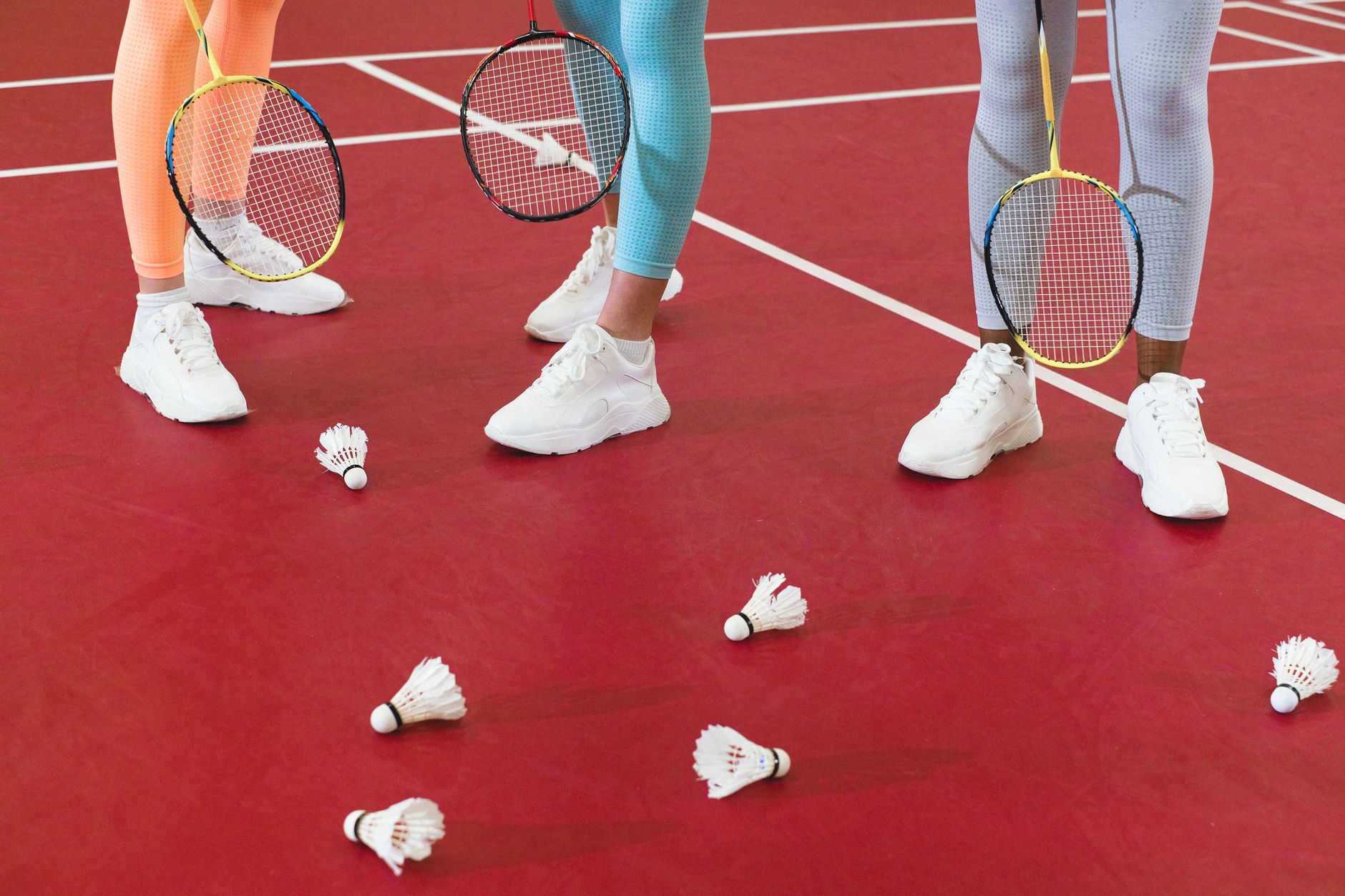
You push off hard to reach a drop shot at the net. Your foot slips. The rally is over, and so is your confidence in your footwear. It happens more than players admit, and almost every time, the culprit is a shoe built for a different sport. Running shoes look similar on the shelf, cost about the same, and feel fine standing still. On a badminton court, they can get you hurt.
The right footwear changes how you move, how fast you recover position, and how long your knees and ankles hold up. This guide covers exactly what to look for in badminton shoes, so you stop guessing and start moving better.
What Makes a Badminton Shoe Different from Other Court Shoes
Badminton is a lateral sport. You lunge sideways, jump, and change direction in under a second. Most athletic shoes are designed for forward movement, running, or gym training. A badminton shoe is built for the specific stresses of court movement: quick pivots, short explosive sprints, and repeated single-leg landings.
The sole is the biggest difference. Badminton shoes use a non-marking gum rubber sole with a low, flat profile. This gives you grip on polished wood or synthetic indoor courts without marking the surface. A thick running shoe sole raises your center of gravity and makes lateral cuts less stable, which is exactly what you do not want when you are chasing a shuttle.
The Three Features That Actually Affect Your Performance
Sole grip and court type. Gum rubber soles grip well on wood and synthetic indoor surfaces. Check that the shoe is rated for indoor courts and labeled non-marking. If you play on a mat or PVC court, look for a slightly softer rubber compound, which gives better grip on smoother surfaces.
Cushioning placement. Badminton players land hard on the forefoot and heel during jumps and lunges. Look for shoes with reinforced cushioning in the forefoot, not just the heel. Some brands add extra padding under the ball of the foot, which directly reduces fatigue during long matches or training sessions.
Lateral support. The upper of the shoe, the part that wraps your foot, should feel snug around the midfoot and ankle without pinching. A reinforced toe box helps when you drag your foot during deep lunges. A loose upper lets your foot slide inside the shoe, which slows your reaction time and increases blister risk.
Key tip: Try on badminton shoes at the end of the day when your feet are slightly swollen, the same way they feel after a full game. If they feel good then, they will hold up through a long match.
How to Pick the Right Fit, Weight, and Budget
Weight matters more than you think. Lighter shoes reduce fatigue over a long session. Most quality badminton shoes fall between 250 and 350 grams per shoe. If a shoe feels heavy in your hand before you put it on, it will feel heavier still after two hours of play.
Fit over brand. A well-fitting shoe from a mid-range brand outperforms a poorly fitting shoe from a premium one. Your heel should sit firmly in the cup with no lift when you walk. Your toes should have about a thumb’s width of space at the front. The midfoot should feel secure, not tight enough to restrict blood flow.
Budget and durability. Entry-level badminton shoes in the 1, 000 to 2, 000 rupee range work fine for recreational players who play once or twice a week. If you train three or more times a week, spend more on a shoe with a reinforced toe and a thicker, more durable sole. Replacing a worn-out shoe every three months costs more in the long run than buying a better pair once.
If you are ready to compare specific options, the badminton shoes range at Nivia Sports covers court-specific designs across different price points, which makes it easier to match a shoe to your playing frequency and court surface.
Make a Decision and Get on Court
Choosing the wrong shoe is one of the most common and most fixable mistakes recreational badminton players make. The checklist is short: gum rubber non-marking sole, forefoot cushioning, snug midfoot support, and a weight under 350 grams. Match those four things to your court surface and your training frequency, and you are set.
Your next step is simple. Take your current shoes and check the sole. If it is thick, rounded, or made for running, swap them before your next session. Your ankles and knees will notice the difference faster than you expect.
What is the biggest issue you have had with court footwear? Drop it in the comments, and let us know what you were wearing when it happened.
